
Live Cisco certification training
Cisco CCNA Training (200-301)
Prepare for the CCNA exam while building practical enterprise networking skills.
Train live with dual CCIE-certified instructors in real Cisco environments. This instructor-led CCNA course combines guided configuration, troubleshooting and exam preparation with extensive hands-on practice.
- Live instructor-led online training
- Dual CCIE-certified instructors
- 80+ hours of hands-on lab access
- Guaranteed-to-run eligible classes
- Two-year free course retake
- Long-term eLearning access
CCNA instructor-led course$3,499 USD
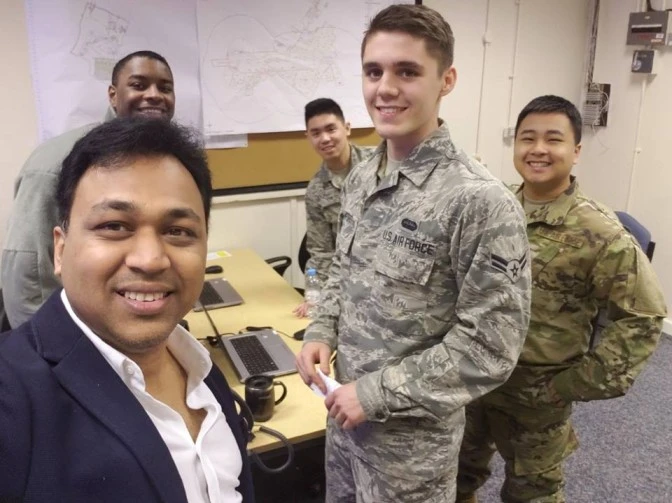
Hands-on Cisco networking instructionReal configuration, troubleshooting and exam-aligned lab practice.
LiveInstructor-led classes
80+ HoursHands-on lab access
2 YearsFree course retake
Dual CCIECertified instructors
Schedule for Cisco CCNA (200-301) Training
| Course | Course Date | Location | Individual Price | Register |
|---|---|---|---|---|
| Cisco CCNA Training (200-301) | 01-11-2027 9:30 am | Online (Live) – Eastern Standard Timezone GMT -5 | $3,495.00 | |
| Cisco CCNA Training (200-301) | 04-12-2027 9:30 am | Online (Live) – Eastern Standard Timezone GMT -5 | $3,495.00 | |
| Cisco CCNA Training (200-301) | 07-12-2027 9:30 am | Online (Live) – Eastern Standard Timezone GMT -5 | $3,495.00 | |
| Cisco CCNA Training (200-301) | 10-11-2027 9:30 am | Online (Live) – Eastern Standard Timezone GMT -5 | $3,495.00 |
Course curriculum
Cisco CCNA 200-301 Course Outline
Build a practical foundation across networking, switching, routing, IP services, security and automation. Every module below is expanded so visitors and search engines can immediately review the complete training scope.
Aligned toCCNA 200-301 v1.1
6Core CCNA exam domains
5 DaysLive instructor-led training
80+ HoursHands-on lab access
2 YearsFree course retake access
01Network FundamentalsModels, devices, addressing and infrastructure foundations20%
- Role and function of routers, Layer 2 and Layer 3 switches, firewalls, access points, controllers, endpoints and servers
- Two-tier, three-tier, spine-leaf, WAN, SOHO, cloud and on-premises network architectures
- TCP and UDP operation, IPv4 addressing, subnetting and private address ranges
- IPv6 addressing, prefix types, address assignment and verification
- Wireless principles, RF concepts, encryption and non-overlapping Wi-Fi channels
- Virtualization fundamentals, virtual machines, containers and switching concepts
- Cabling, interface types, duplex, speed and common physical-layer problems
02Network AccessSwitching, VLANs, trunks, EtherChannel and wireless access20%
- VLAN configuration and verification across multiple switches
- Access ports, voice VLANs, default VLAN behavior and interswitch connectivity
- 802.1Q trunking, native VLANs and Layer 2 discovery protocols
- Rapid PVST+ spanning-tree operation, root bridge selection and port roles
- EtherChannel configuration and verification using LACP
- Cisco wireless architectures, AP modes and physical infrastructure connections
- Wireless LAN access, security settings and management interfaces
03IP ConnectivityRouting decisions, static routes and single-area OSPF25%
- Routing-table components, administrative distance, metrics, gateways and route sources
- Router forwarding decisions using longest-prefix match and route preference
- IPv4 and IPv6 static routes, default routes, network routes, host routes and floating static routes
- Single-area OSPFv2 neighbor relationships, point-to-point and broadcast networks
- OSPF router ID, network selection, costs and designated-router behavior
- First-hop redundancy concepts and default-gateway availability
- Troubleshooting reachability, incorrect routes and Layer 3 forwarding problems
04IP ServicesNAT, DHCP, DNS, NTP, QoS, SNMP and device management10%
- Inside source NAT using static mappings and address pools
- NTP operation and client/server configuration
- DHCP client, relay, server behavior and DNS functionality
- SNMP, syslog levels, logging facilities and network monitoring concepts
- Per-hop QoS behavior including classification, marking, queuing and policing
- SSH remote access and secure device administration
- TFTP, FTP and common network service use cases
05Security FundamentalsThreats, access control, device hardening and Layer 2 security15%
- Security concepts including threats, vulnerabilities, exploits and mitigation techniques
- Security program elements, user awareness, physical controls and password policies
- Local password protection, secure management access and device hardening
- AAA concepts including authentication, authorization and accounting
- IPv4 access control lists for traffic filtering and administrative access
- Layer 2 security using DHCP snooping, dynamic ARP inspection and port security
- Wireless security protocols, WPA2, WPA3 and WLAN authentication
- VPN, IPsec and site-to-site or remote-access security concepts
06Automation & ProgrammabilityControllers, APIs, JSON, automation tools and AI concepts10%
- How automation affects network management, operations and configuration consistency
- Traditional networking compared with controller-based and software-defined architectures
- Control-plane and data-plane separation, northbound APIs and southbound APIs
- REST API characteristics, HTTP methods, authentication and CRUD operations
- Reading and interpreting JSON-encoded data
- Configuration-management concepts using tools such as Ansible and Terraform
- AI, machine learning and predictive or generative capabilities in network operations
Hands-On CCNA Lab Practice
Guided exercises reinforce configuration, verification and troubleshooting skills.
IPv4 subnetting and addressing
IPv6 configuration and verification
VLANs and 802.1Q trunks
STP and EtherChannel
Static and default routing
Single-area OSPFv2
NAT, DHCP and NTP
Standard and extended ACLs
Switch security and device hardening
Ready to prepare for the Cisco CCNA certification?
Request CCNA Course InformationRequest the detailed syllabus, upcoming class dates and enrollment information.